
About The Elephant Path
The Elephant Path is a woman-owned, private pay telehealth practice for teens and adults across Michigan. This page shares who I am, how the practice works, and why I chose private pay.
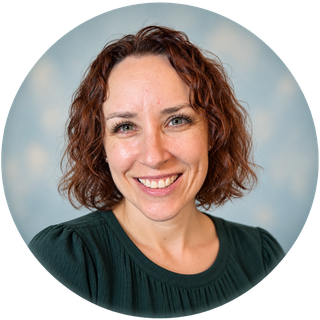
Meet Sandra Dougherty, LMSW
I’m Sandra, a Licensed Master Social Worker with 18 years of experience supporting people through loss, illness, and change.
My path began as a medical social worker in oncology and hospice, supporting people living with cancer and serious illness, and the families who loved and cared for them. That work taught me how much grief can live inside illness, caregiving, and change, and how it helps to have someone beside you.
From there I moved to serving my community in outpatient mental health. Today I support individuals and families experiencing grief and loss, chronic and terminal illness, life-limiting illness, death and dying, caregiving, parenting, anxiety, and life transitions. I founded The Elephant Path to offer this care in a simpler, more direct way.
My approach
Every person’s path is different, so I shape our work around you. I offer compassionate and evidence-based care that meets you where you are.
I draw on cognitive behavioral therapy, which looks at how our thoughts, feelings, and actions affect one another. I also use mindfulness-based approaches and narrative therapy, which helps you tell and reshape your own story. When it helps to focus on what’s next, I use solution-focused therapy to build on what’s already working.
Underneath it all is a belief in your strengths. Along the way, I can share information about what you’re going through and connect you with helpful resources in your community.
Education and credentials
- Master of Social Work (MSW), University of Michigan, 2007
- Bachelor of Science in Clinical Psychology, with a dual focus in Cultural Anthropology, University of Michigan–Flint, 2005
View my Psychology Today profile (opens in a new tab)
Licensed Master Social Worker – Clinical, State of Michigan, License #6801089986
My mission
To offer compassionate, client centered care that is individualized, accessible, and affordable. To walk alongside each person with authenticity, warmth, and respect.
How the practice works
Telehealth across Michigan
All sessions are held by secure video, so you can meet with me from home, work, or wherever you feel comfortable. I can see clients anywhere in Michigan. You need to be physically in Michigan during each session.
Sessions on Doxy.me
We meet on Doxy.me, a secure, HIPAA-compliant video platform. I’ll send you a link. You click it, type your name, and check in. It works in your web browser on a phone, tablet, or computer, with no app to download and no account to create.
Your client portal
Once we begin, you’ll have a secure, HIPAA-compliant client portal through TherapyNotes. In the portal you can:
- complete your paperwork
- send me secure messages
- view statements
Payment at the time of service
Payment is due at the time of service and is securely processed through my electronic health record (EHR) system. I accept Visa, Mastercard, American Express, Discover, and HSA cards.
A sliding scale
To help make care as accessible as possible, a limited number of reduced-fee appointments are available for people with differing financial needs. If cost is a concern, we can talk about options during your free consultation.
Why private pay?
The Elephant Path offers numerous benefits and protections not available through typical insurance-participating practices. I know that paying out of pocket is a change for many people, so I want to share why I chose this model and how it can serve you.
A direct care contract
Your care is an agreement between you and me. Together we explore your needs, set your goals, and create a care schedule that fits your life. There are no billers, office managers, front desk staff, insurance companies, or employers involved in your care.
Protected information
No insurance company or third party sees your information in order to pay for your care. There is no diagnosis to submit and no claim to process.
Transparent cost
You know the cost before care begins. There’s no waiting weeks for an insurance company to process a claim, and no large, unexpected bills. You’ll receive a Good Faith Estimate, and payment is made at the time of service.
Most of all, this model makes room for transparency and rapport: an honest, trusting relationship that is built between the two of us and focused entirely on you.
Like all licensed clinicians, I still keep secure records and follow the laws that protect your privacy and safety.
Why elephants?

Elephants are at the heart of this practice, and they connect closely to my own path.
A herd that stays close
Elephants live in close-knit family groups and form deep, lasting bonds. They care for one another’s young and move through the world together.
Witnessing grief together
Researchers have observed elephants approaching, touching, and staying near other elephants who have died, supporting one another through grief.1 That is what guides my work: no one should have to walk through loss alone.
Elephants and cancer research
Elephants get cancer far less often than you might expect for such large, long-lived animals. In 2015, researchers found that elephants carry at least 20 copies of TP53, a gene that helps stop tumors from forming. Humans have just one.2 Scientists, including pediatric doctors, are now studying how the elephant version of this gene might one day help treat cancer, especially in children.3
Sources
- Goldenberg, S. Z., & Wittemyer, G. (2020). Elephant behavior toward the dead: A review and insights from field observations. Primates, 61, 119–128. Read the study (opens in a new tab)
- Abegglen, L. M., et al. (2015). Potential mechanisms for cancer resistance in elephants and comparative cellular response to DNA damage in humans. JAMA, 314(17), 1850–1860. Read the study (opens in a new tab)
- Schiffman Lab, Huntsman Cancer Institute, University of Utah Health. p53 studies (opens in a new tab)